GR-0X Morphing Humanoid Upper Body
A humanoid upper body research platform that reconfigures its own morphology to fit whatever task it's doing, teleoperated through VR with control that stays intuitive across every configuration.
Project Details / Background
Any fixed limb geometry is a compromise: a reach and joint arrangement tuned for one task is rarely the best one for the next. The GR-0X humanoid is a research platform built around morphing limbs (limbs that can change size and geometry rather than staying fixed) so the robot can reconfigure its own structure to whatever morphology best suits the task at hand, rather than working around a single fixed body plan. Me and my team are designing the full mechanical, electrical, and control systems for the platform from scratch for the upper body.
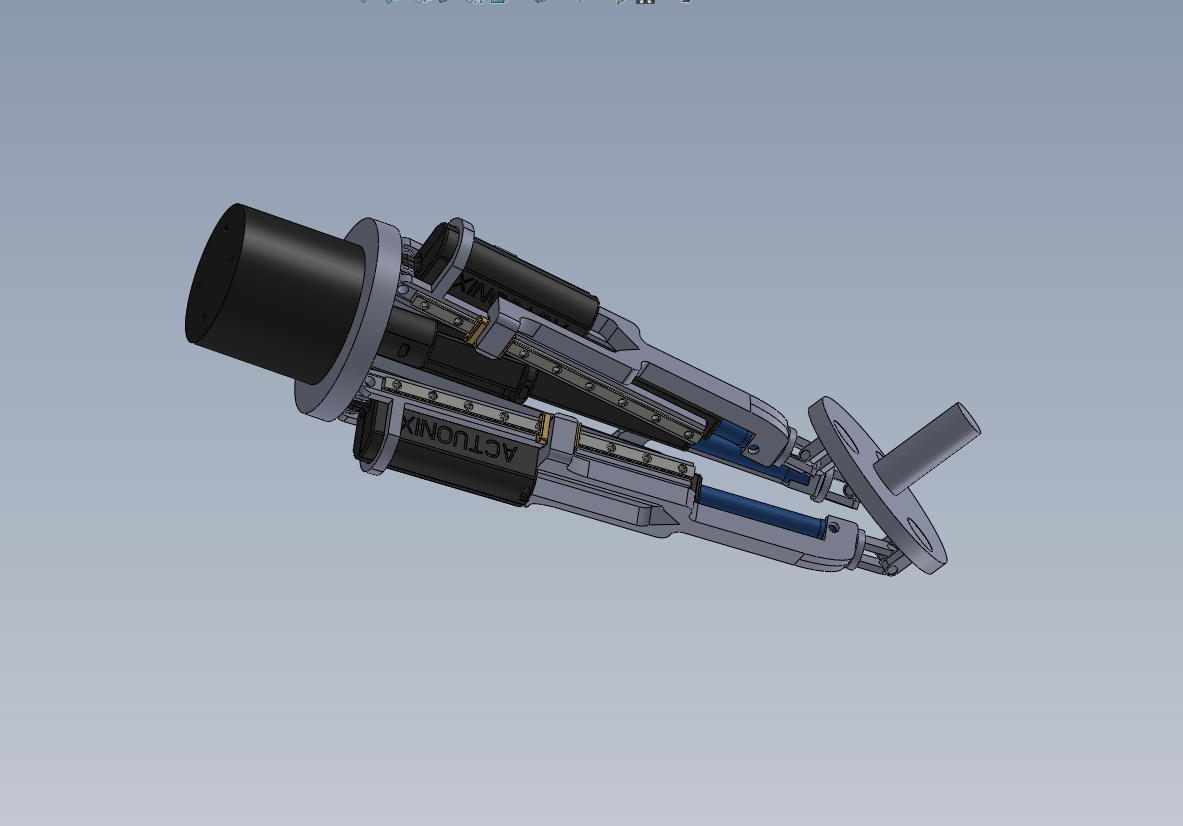
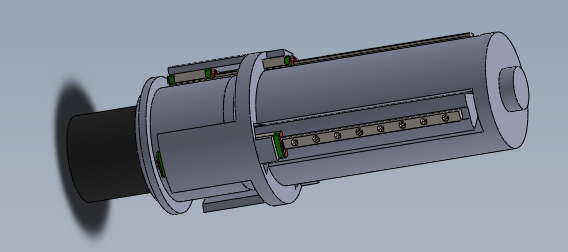
I own the full mechanical design of the upper body. That includes the reconfiguration mechanisms, which use a combination of mechanical systems to physically reconfigure the upper body's structure mid-task. I used FEA and topology optimization to design them, and they extend reach by 75% while maintaining a 10kg payload capacity. I'm also using topology optimization and FEA to make the upper body a durable, usable research platform.
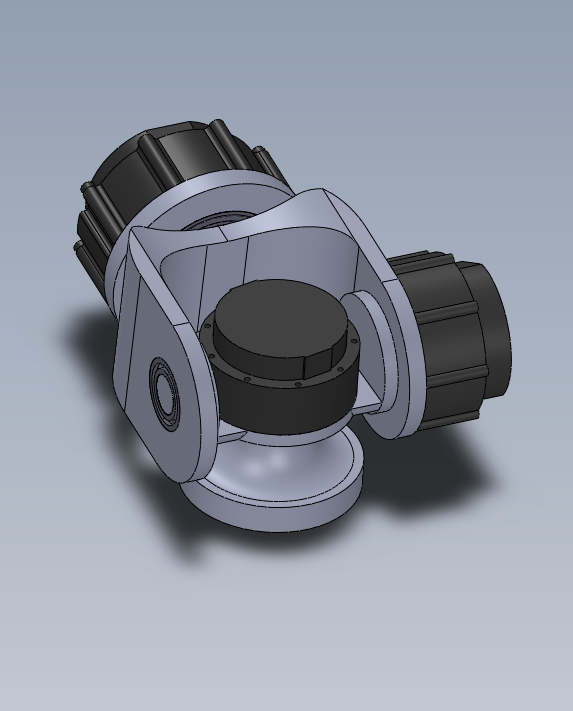
The upper body's mechanical architecture draws on parallel mechanisms and quasi-direct-drive (QDD) actuators. We're controlling the QDD actuators over CAN bus using a Raspberry Pi and Jetson. We also made custom PCBs for the separate modules in the head, and we put a RealSense camera in the head for vision.
The upper body is currently planned to be teleoperated through VR, letting a user directly control it. The core design challenge for that is keeping that control intuitive for the operator even as the limbs morph: as the robot's limb geometry changes, the mapping between the user's movements and the robot's motion has to adapt so teleoperation still feels natural at every morphology, rather than becoming confusing as the robot's proportions shift.
The goal is to have the full humanoid walking and manipulating objects by the end of 2026. My part of that is the upper body.
Longer-term, the goal is to build a vision pipeline on top of this platform so the robot can select and carry out tasks autonomously, choosing its own morphology for the task rather than relying on a human operator for every motion.
Image Gallery